Bram Stoker's Dracula, first published in 1897, remains one of the most famous Gothic novels of all time. This novel is not told in a straightforward, chronological, omniscient manner, like many nineteenth-century novels. Instead, it is composed of a collage of letters, journal entries and diary jottings, in addition to a portion of a ship's log, various newspaper clippings, and even a "phonograph diary." Since the story is basically a mystery, this technique is highly effective in sustaining suspense, for there are literally dozens of narrative pieces for readers to fit together before they can see the complexity of the novel resolved and the entirety of Stoker's pattern. Stoker most likely borrowed this approach to his novel from Wilkie Collins, who used the same technique in his "detective" novel The Woman in White (1860).
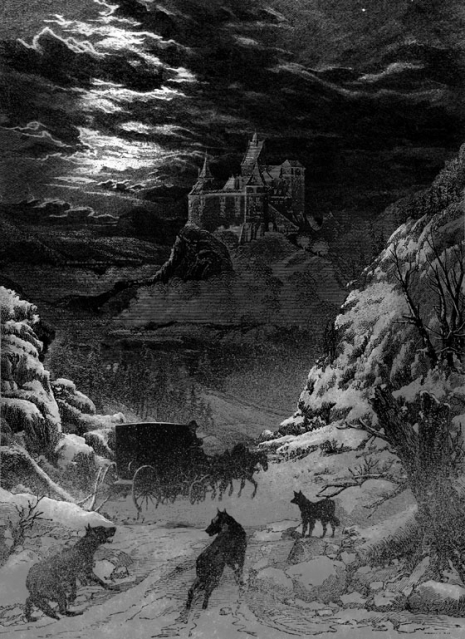
The story begins Sometime in the late nineteenth century, Jonathan Harker, a young English lawyer, is traveling to the Castle Dracula, which is located in Transylvania, in order to finalize a transfer of real estate in England to Count Dracula. Harker becomes extremely nervous when all of the local peasants react in fear after they hear of his destination; nevertheless, he continues on to the castle until he meets an emissary of the Count in the Borgo Pass. The mysterious coach driver continues on to the castle, arriving in pitch darkness, to the accompaniment of howling wolves.
The novel then shifts to England, where Harker's fiancée, Mina Murray, is visiting her friend Lucy Westenra, who has accepted the marriage proposal of Arthur Holmwood, while rejecting the proposals of Dr. John Seward, head of a lunatic asylum, and Quincey Morris, an American from Texas, currently visiting Holmwood. Mina's two main concerns are that Lucy has taken up her old habit of sleepwalking, and that it is a long time since she has heard from her own fiancé, Jonathan.
One of the novel's central conflicts is between the forces of good, led by Professor Van Helsing, and the dark powers of Dracula. Mina Harker falls under Dracula's spell, and the group of protagonists must race against time to destroy Dracula before he fully corrupts her soul. The struggle between light and darkness is a reoccuring theme throughout the novel.
Here is an excerpt from Dr. Van Helsing's Memorandum in the novel: "There was one great tomb more lordly than all the rest; huge it was, and nobly proportioned. On it was but one word
DRACULA.
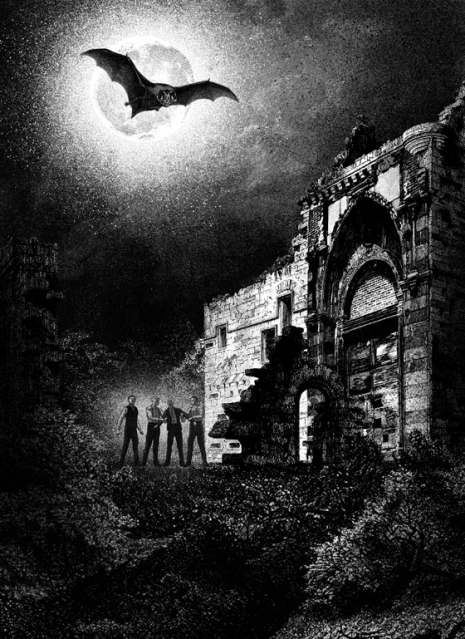
This then was the Un-Dead home of the King-Vampire, to whom so many more were due. Its emptiness spoke eloquent to make certain what I knew. Before I began to restore these women to their dead selves through my awful work, I laid in Dracula’s tomb some of the Wafer, and so banished him from it, Un-Dead, for ever. Then began my terrible task, and I dreaded it. Had it been but one, it had been easy, comparative. But three! To begin twice more after I had been through a deed of horror; for if it was terrible with the sweet Miss Lucy, what would it not be with these strange ones who had survived through centuries, and who had been strengthened by the passing of the years; who would, if they could, have fought for their foul lives....".